Based on the proposal to produce a series of video resource packs on the subject of community health and the use and management of medicinal plants, the initial step was the acquisition of the necessary equipment, such as video camera, computer Mac mini for office work and a used PowerBook for field work, together with accessories, video tapes, etc., and getting familiarized with the video editing program (IMovie).
Following on that first step, contacts were taken with the Regional Department of Intercultural Healthcare, of the Health Ministry, and the indigenous organization of the Shiwiar People –NASHIE (Nacionalidad Shiwiar del Ecuador) to coordinate the trips to the village of Chuintza, site where the designing of the health program of NASHIE was to be discussed during a series of workshops. This is where the shooting for the video was to take place. To access this village a 45 minutes flight by bush plane is necessary.
On another side, contact was made with young kichwa men from the community of Canelos, located an hour an a half by road from Puyo, to work with them on a second series of video resource packs.
Video resource packs
1. “The Health and Ancestral Medicine Program of the Shiwiar people”
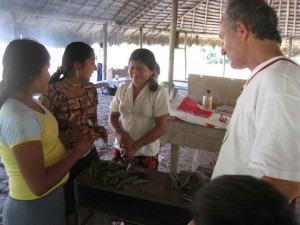
A series of videos showing the development of a local process by an indigenous people to design their own health program largely based on the reassessment of local health traditions and ancestral medicine in Ecuadorian Amazonia. This project started in September 2009. The first footage was shot in the Indian village of Chuintza, in Shiwiar territory, close to the boarder with Peru, reachable after a 45 minutes flight with a bush plane. After subsequent trips, a good amount of footage has been recorded and a first documentary reporting on one of the training workshops has been put together. The plan is to accomplish the objectives by May 2011 with the production of 3 short video packs on a) the local process to design the program, b) the making of herbal remedies for common diseases and c) the history and actual situation of the shiwiar shamanistic tradition.
2. “The Land of the Powerful Canelos Shamans”
This is the second filming project. It includes the training of two Kichwa young men from the village of Canelos to work with the camera on the collection of testimonies relating to the history of the powerful shamans tradition in Canelos, as reported by anthropologist Michael Harner in his popular book “People of the Sacred Water Falls”, 1967. This video pack intends to show the potential of shamanistic healing to support primary health care in the indigenous villages of Ecuadorian Amazonia. It is also collecting materials on other aspects of the loss of the kichwa health and medical traditions, so as to help younger generations understand better the historical processes which have determined many of the actual health conditions, and continue to do. Canelos is a kichwa Indian village, located an hour and a half by road from Puyo.
This work is in progress and will conclude by May 2011. It is also putting together several video packs on the making of different herbal remedies, to be used by local women to treat the most common ailments and diseases at home.
3. “The lost tribe of the Canelos people in Peru”
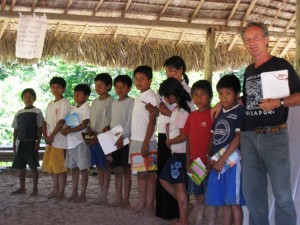
The Kichwa Canelos are from the Pastaza river system in Ecuador. In the early 1900`s a group of Canelos people was taken to Perú by a “cauchero” to collect rubber in the southeastern jungles of the state of Madre de Dios. The people who survived those difficult times and their descendant never returned to Ecuador. In the 1980’s their community received official recognition. Its name is Puerto Arturo, located on the low río Madre de Dios, close to the border with Bolivia. The elders still speak Kichwa, but not the younger generations.
The film will record testimonies from the Kichwa people in Ecuador, about their origin, their culture. It will be shown to the people from the community of Puerto Arturo in Peru to promote cultural exchange and reaffirmation. An indigenous friend from Puerto Maldonado, the capital of Madre de Dios, will in turn be filming the people from Puerto Arturo watching the film from Ecuador to produce another visual document to be shown back to the people in Ecuador.
4. “Mother: teach me the medicines from the forest”
This fourth filming project shows a mother and her daughter reunited after a long absence of the daughter who had left her community when she was 12 to go work in different cities of the country as housemaid. In her mid twenties, her destiny takes her to look back on the culture she was born in (Kichwa); she returns to her community and ask her mother to teach her some of the things she did not learn when she was young.
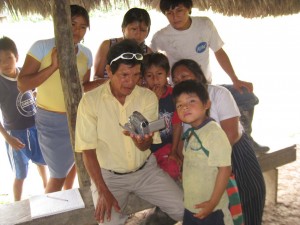
By watching this video, people are encouraged to learn about some of the most important medicinal plants used to treat common ailments and diseases at home. The film will help people identify properly the plant, know the part being harvested and used for medicine, learn how to make the remedy and the way to give it or apply it to the patient. A short extract of this video was included in the 7 minutes film presented at the 12th ISE Congress in Tofino.
Didier’s participation in the 12th ISE Congress in Tofino, Canada, and the work being done by CODEAMA, was highlighted in the Special Issue of the ISE Newsletter (March 2010).