Ethnobiology in Asia
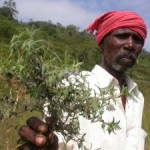 Livelihood and potential conservation roles of wild edible herbs
Contributed by ISE member R.P. Harisha. Traditional communal area resources are mostly described as open access resources and are frequently associated with over-utilization and poor management of the natural resources therein. Yet it is those’ unproductive and impoverished lands’ that support and supply diverse sources of important biological resources from which local people benefit…
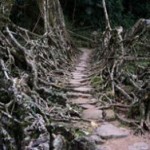
The Root Bridges of Cherrapunji – centuries-old bridges, grown from tangled roots
Reproduced with permission from Atlas Obscura. The living bridges of Cherrapunji, India are made from the roots of the Ficus elastica tree. This tree produces a series of secondary roots from higher up its trunk and can comfortably perch atop huge boulders along the riverbanks, or even in the middle of the rivers themselves…
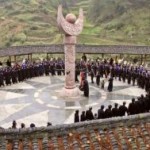
Hlib Jiangl Naox Niex
Contributed by ISE Member Amy Eisenberg. While serving as an International Expert in Hunan Province of southwest China at the Research Institute of Anthropology and Ethnology, Jishou University in impoverished Xiangxi Autonomous Minority Prefecture, Maid Wux, my Hmong graduate student took us to her high mountain village of Hlib Jiangl in the rural reaches of Guizhou Province to celebrate Naox Niex, the Hmong New Year in November…
A Focus on the ISE Darrell Posey Fellowship Program
 No need for Shame
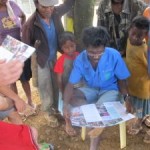
Contributed by Jenne de Beer, ISE Field Fellow 2009-2011. Negrito Cultural Revival & Empowerment Initiative (Philippines): As reported earlier on the ISE website, a successful “Mam-eh”Aeta Cultural Revival Festival cum Development Forum took place last April in Bgy. Sta. Juliana, Tarlac… No Honey, No Money! (Indonesia): A different type of event, though also concerning a beautiful forest food, took place last September in Ujung Kulon National Park, Indonesia…
 “Video en las Comunidades” (Ecuadorian Amazonia)
Contributed by Didier Lacaze, CODEAMA, ISE Small Grant Recipient 2009-2011. The use of video among indigenous people in Amazonia is well documented (Turner, 1991) and has proven an appropriate and useful tool to support inter-communal and cultural communication. Learning to use a camera and edit short films about the history, culture and life of their people creates possibilities for a renewed encounter between the young and the elders, among others…
 The Darrell Posey archive, Pitt Rivers Museum, University of Oxford
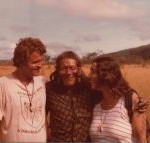
Contributed by ISE members Elaine Elisabetsky and Kristina Plenderleith. Darrell Posey was an anthropologist and ethnobiologist who lived with the Kayapó Indians of Brazil in the 1970s and 1980s. It was a time of rapid change in the Jê community and his research material recording Kayapó life at that time vividly records these changes…
 ASAPP after the ISE Darrell Posey Small Grant (2007-2011)
Contributed by Ileana Valenzuela, member of Grupo Solidario, ISE Small Grant Recipient 2005-2007. El Grupo solidario de acción y propuesta de Petén (GSAPP): The ASAPP is a nonprofit association formed by a small number of people, mostly community leaders (men, women, old, young, indigenous, non-indigenous, believers and non-believers), who formed El GSAPP in 2002… [Lee en español]
Conference and Workshop Reports
 On forest foods, a festival and community empowerment
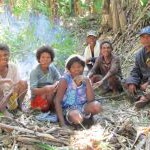
Written by Jenne de Beer, Reproduced with permission from the CFA Newsletter. To many indigenous communities in Asia, traditional activities such as the gathering of forest foods, hunting and fishing, are vital adjuncts to farming and together, together forming an integrated system of resource utilization, catering to elementary subsistence needs. Forest foods can be a key emergency food buffer during times of famine or seasonal scarcity…
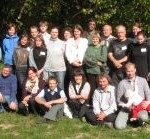 2nd ISE Eastern-European Ethnobiology Workshop in Hungary: “Methodologies and methods in ethnobiology”
Contributed by ISE members Anna Varga and Zsolt Molnár. The 2nd Eastern-European Ethnobiology Workshop was held at Királyrét in the heart of the Börzsöny Mountains, Hungary, between 13-16th October, 2011.At the 1st EEE Workshop in Padise (Estonia) in 2010 we decided to develop a research network and to have workshops each year, and in Hungary in 2011…
Announcements from the ISE
 Mary Stockdale joins the ISE Board
The ISE Board is pleased to announce the appointment of Mary Stockdale as the ISE Co-Chair of the ISE Darrell Posey Fellowship for Ethnoecology and Traditional Resource Rights with current Chair, Sarah Laird. Mary and Sarah are currently working with the 2011 Selection Committee to review the applications for the four program components (Field Fellowship, Small grants, PhD Fellowship, and Masters Felllowships) that have been generously funded by the Christensen Fund. We expect to announce the recipients in early January 2012.
 Krystyna Swiderska joins the ISE Board
The ISE Board is pleased to announce the appointment of Krystyna Swiderska as the ISE Co-Director of the ISE Global Coalition for Biological and Cultural Diversity with current Director, Alejandro Argumedo. Among other initiatives, Alejandro and Krystyna are coordinating a full day workshop to be held during the 2012 ISE Congress. The workshop will include a variety of presentations on protocols used as tools to implement the UNDRIPs principles in different international agreements, relating to traditional knowledge (e.g., CBD, FAO, WTO, WIPO, WHO), followed by an afternoon of discussion around practical implementation.
 Pre-registration for the 2012 ISE Congress is open!
The online registration for the 13th Congress of the International Society of Ethnobiology to be held in Montpellier, 20-25 May 2012, is now open. Please visit the page “Registration” of the congress website for further instructions about how to proceed. The early and regular registration fees are provided in the table below.

Ethnobiologists’ Bookshelf
Upcoming Events and Other Announcements
|
Disclaimer The views and opinions expressed in the articles in the ISE Newsletter are those of the authors and do not necessarily reflect the policy or position of the International Society of Ethnobiology. |