Welcome to the online ISE Newsletter. The full content, including updates on Society business, profiles, regional topics and conference reports, is now available online, but you can still download pdf versions if you prefer.
ISE Newsletter Volume 6, Issue 1 (January 2015)
We’ve put together this issue of the ISE newsletter to reflect on the 2014ISE Congress in Bhutan last June. It highlights the different components of the Congress as well as the pre-congress workshop for emerging ethnobiologists and France-Bhutan High School Student Projects. Also included are reflections from some of the ISE travel award recipients, student poster award winners, and other members. If you have other stories or pictures from the congress that you’d like to share with the ISE, please contact us and we will include them in the online version of this issue!
~The Editorial Team
Remembering the 14th ISE Congress in Bhutan
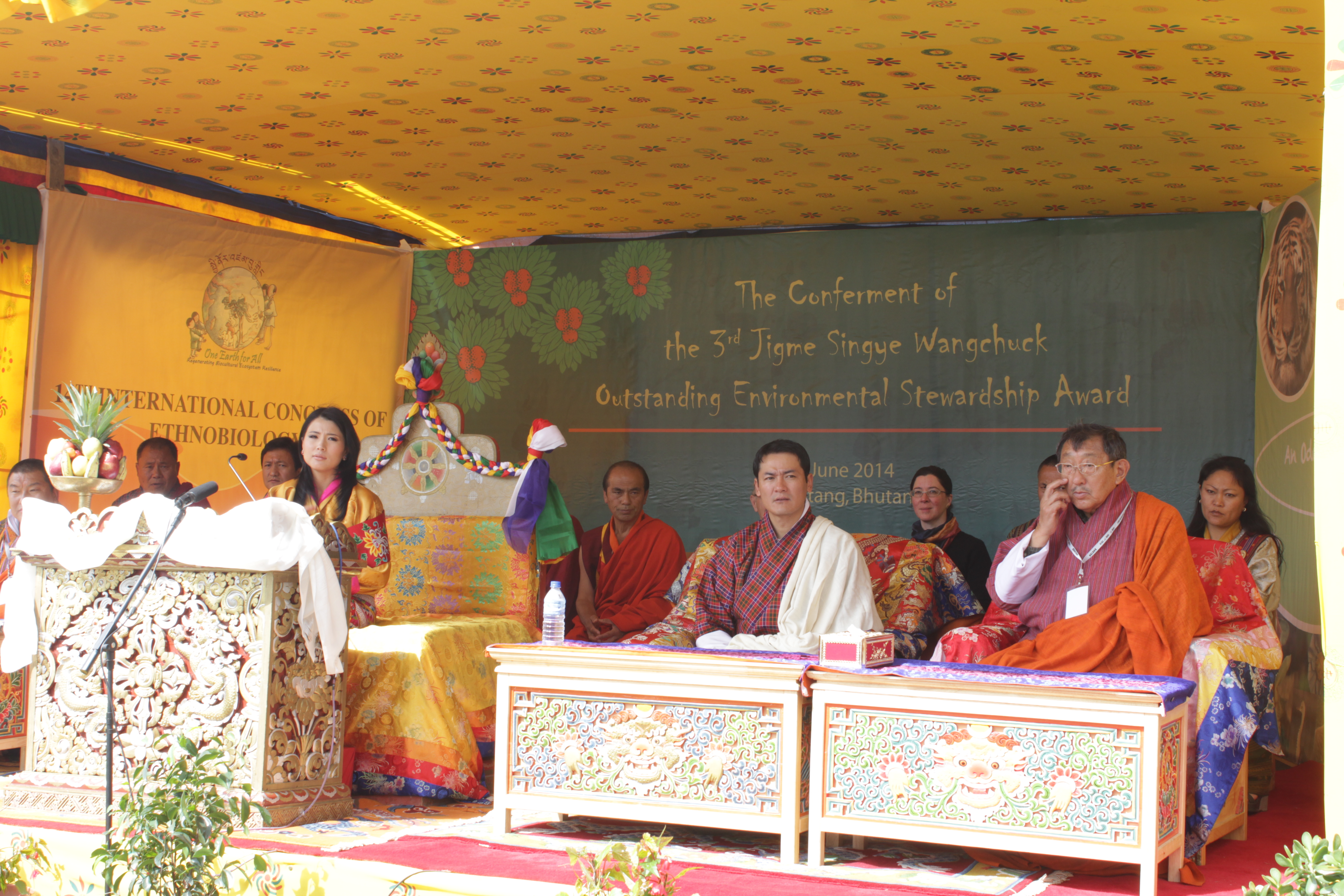
Contributed by Sangay Wangchuk. In May 2012, Montpellier-France, the Toka Toka (Darrel Posey walking stick) was handed over to Bhutan by the 13th International Society of Ethnobiology (ISE) congress organizers. It was indeed a great privilege for the Ugyen Wangchuck Institute for Conservation and Environment. Hosting the 14th ISE in Bhutan not only provided a huge opportunity to Bhutanese but also to congress participants to further revive, strengthen and appreciate some of the fading indigenous and cultural practices in the fast changing world…
Kuzuzangpo la! Pre-Congress Workshop for Emerging Ethnobiologists, Bhutan 2014
 Contributed by Anna Varga andd Jigme Dorji. The 3rd Emerging-Ethnobiologist Workshop was held at the College of Natural Resources, Lobesa, Bhutan from May 27 to 30, 2014. Anna Varga from Hungary and Olivia Sylvester from USA/Canada (ISE Student Representatives) organized the workshop with the help of local host cum ISE member Jigme Dorji. There were five International mentors and one local, as well as several guest speakers who facilitated the three day workshop attended by 27 participants from 20 countries…
Emerging from the Mist—Reflections on the Emerging Ethnobiologist Workshop
 Contributed by Evelyn Roe. The polite rain of south-west England taps on my window. I lift my eyes from the keyboard and soft memories of the ISE Congress arrive like mist over Dartmoor. Bhutan is a far-off place, and the workshop just a dream: a dream of friendship, culture, learning, and un-learning. But, as I inhale again the tangy, pine-filled air that claimed me as I stumbled out of the coach on that first, dark arrival at the hostel in the mountains, my mind sharpens, and I am back in Lobesa in an instant…
Importance of Environmental and Cultural Preservation: Perspectives of Young People on a Distant Country, its Culture and Traditions
 Contributed by Dominique Chirpaz. Our project, born in 2012 in Montpellier, has been a long and precarious adventure. But finally, we don’t regret anything: the long months passed to prepare our common presentation, the stress linked to the various administrative problems to solve, as well as the financial support research…
Reflections from Congress Participants

Contributed by Alí García Segura. This year from June 1-7 in Bhutan a successful event was held and I’d like to share my experience with you. Bhutan is a country nested in the mountains between India, China and Nepal. The 14th Congress of the International Society of Ethnobiology was held in Bumthang, Bhutan…

Contributed by Linda McDonald. In June of this year I had the wonderful opportunity to be invited as a participant and speaker to the 14th Congress for the International Society of Ethnobiology in Bumthang, Bhutan. I was honoured to have been asked to speak on behalf of my First Nation, the Liard First Nation in Watson Lake, Yukon, Canada. From the moment I stepped on the DrukAir airplane, with the Thunder Dragon on the tail, and the fact that I was flying to the Kingdom of Bhutan (as it is officially known), I knew this would be a special experience…

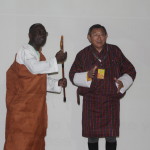
Contributed by Ssekimpi M. Ssemambo. I attended the congress as a travel awardee; but also as an elder from Uganda the next (ISE Congress) host country in 2016. Here below are my general remarks briefly on the above congress: I didn’t have any knowledge about the ISE and its activities. My participation was pleasurable but also a big blessing to me in my capacity as a community/ traditional leader in the Buganda Kingdom…
Contributed by Viktor Ulicsni. On my first international congress ever, in May 2010, in Tofino, Canada, as a new member of the International Society of Ethnobiology I was also among those who voted for the host of the 2014 ISE Congress. Then, as I was quite beginner in my ethnobiological work I haven’t even dare to dream that I will have the chance to participate as an oral presenter on the so prominent event in such an interesting country as the mysterious Bhutan. However greatly thanks to the ISE travel award this unrealistic possibility was fulfilled finally…
 Hawaiʻi Beyond the Wave, Hawaiʻi Beyond the Postcard travels to the Kingdom of the Dragon. Contributed by Mascha Gugganig. After a day long journey from Vancouver via China and Nepal, my accompanying traveling exhibit had mastered what many others experienced that attended the 14th conference of the ISE in Bhutan. A small airplane released a number of conference attendants finally reaching their destination. Their awe and wonder spoke through a hesitant taking of pictures, turning and turning around to take in the landscape…
ISE Student Poster Award Recipients
1st Place: Karly Burch, Exploring Peoples` Relationships to Food in the Aftermath of the Fukushima Daiichi Nuclear Power Plant Disasters.
2nd Place: Michelle Baumflek, Cornell University, USA, Habitat Modeling for Health Sovereignty: The Case of Muskrat Root in Northern Maine.
3rd Place: Isabel Diaz Reviriego, Ethnoecology Laboratory, Institut de Ciencia i Tecnologia Ambientals, Spain, Is Ethno-medicinal Plant Knowledge Gendered: A Case Study from the Bolivian Amazon.
Honorable mentions were given to:
- Jeffrey Wall, Cornell University, USA, Medicine for the Trees: Biological Control of Chestnut Blight in Azerbaijan.
- Blanca Roldan-Clara, Universidad Autonoma de Baja California, Mexico, Perceptions of the Traditional Mexican Wild Bird Grabbers and Dealers for the Pet Market.
- Thiago Gomez, Universidade Federal Santa Catarina, Brazil, Ethnoecological Restoration: Renewing and Maintaining Ecological and Cultural Resilience – Case Studies from West Coast Canada and Southern Brazil.
- Jose Tomas Ibarra, Pontificia Universidad Catolica de Chile, Chile, and University of British Columbia, Canada, Decending from Mountains: Traditional Weather Forecasting in Andean Temperate Forests, Chile.
Research Reports from the Field
Impacts of Climate Change on the Livelihoods of Loita Maasai Pastoral Community and Related Indigenous Knowledge on Adaptation and Mitigation
 Contributed by Henri ole Saitabau. Since time immemorial, the Loita Maasai have had rich indigenous knowledge about their environment and how to monitor and predict climate and seasonal cycles through observation of behavioral characteristics of biological components, cosmology and other traditional, socio-cultural methods. They still use the same knowledge to model weather events and livelihood management…
ISE Announcements
 Update on the 2016 ISE Congress

This announcement includes general information about the 2016 Congress to be hosted in Uganda, as well as the main theme and sub-themes.